Is Glutathione the Right Treatment for Skin Brightening?
Skin brightening has become one of the most searched topics in skincare — and glutathione sits right at the centre of that conversation. You've probably seen it on clinic menus, supplement shelves, and social media. But is it actually worth it? And more importantly, is it right for your skin?
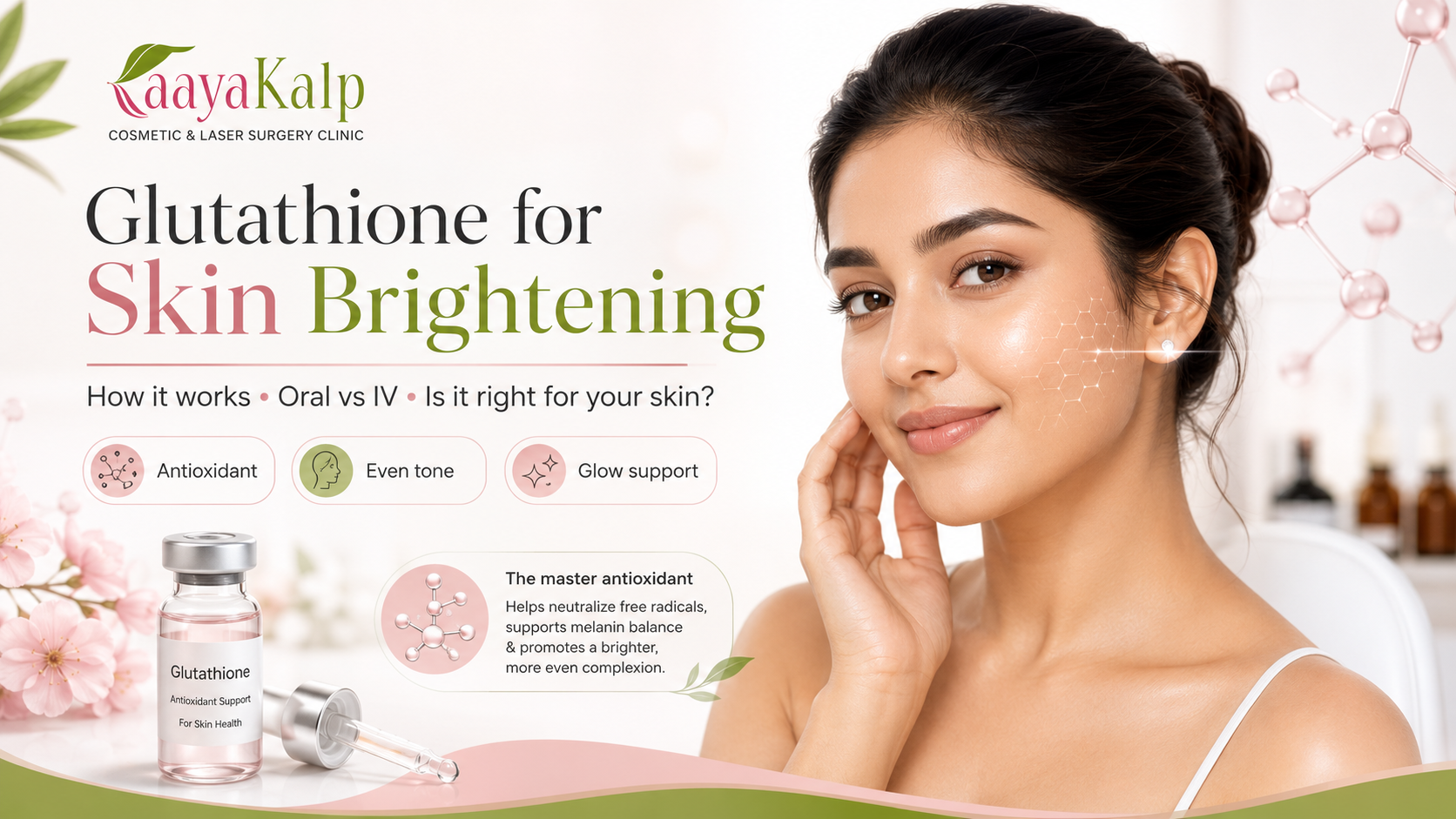
What Is Glutathione and Why Is It Used for Skin?
Glutathione is a naturally occurring antioxidant your body already produces. It's made up of three amino acids — cysteine, glutamate, and glycine — and it works inside every cell to neutralise free radicals and protect tissue from damage.
How did it become a skin treatment?
Researchers noticed that people with higher glutathione levels often had visibly lighter, more even skin tones. The connection led to deeper study, and the link between glutathione and melanin production became clear.
The Melanin Connection
Melanin is the pigment responsible for your skin colour. The more melanin your skin produces — specifically a darker form called eumelanin — the darker your skin tone appears.
Glutathione interferes with this process at the source. It inhibits an enzyme called tyrosinase, which is essential for melanin production. Less tyrosinase activity means less eumelanin — and a gradual shift toward a lighter, more even skin tone.
How Does Glutathione Actually Work on the Skin?
Think of it this way: your skin is constantly producing pigment. Glutathione acts like a dimmer switch on that process — it doesn't erase existing pigment overnight, but it slows down the production of new dark pigment while your skin naturally sheds older cells.
There's also a secondary shift that happens. Glutathione encourages the skin to produce phaeomelanin — a lighter, yellowish-pink form of melanin — instead of the darker eumelanin. The result over time is a brighter, more luminous skin tone rather than a stark colour change.
This is why consistent use matters. Glutathione is not a one-session treatment.
Types of Glutathione Treatments — Which One Actually Works?
This is where most people get confused. Glutathione is available in multiple forms, and they don't all deliver the same results.
Oral Tablets and Capsules
The most accessible and widely used form. Convenient, affordable, and available over the counter. However, a significant portion gets broken down during digestion before it reaches the bloodstream — which limits how much actually reaches your skin.
Best for: maintenance, mild brightening, or those new to glutathione.
IV (Intravenous) Injections
Administered directly into the bloodstream at a clinic. This bypasses digestion entirely, which means higher absorption and faster, more visible results.
This is the form that shows the most consistent clinical outcomes — but it must be done under medical supervision. Self-administered or unregulated IV glutathione carries real risks.
Best for: those seeking visible results faster, under proper dermatological care.
Skin Creams and Serums
Topical glutathione products exist but have the lowest efficacy of all three forms. The glutathione molecule is too large to penetrate deep into the skin on its own. These products can support overall skin health but won't deliver standalone brightening results.
Best for: combination use alongside oral or IV forms — not as a primary treatment.
What Results Can You Realistically Expect?
This is the question everyone asks — and the honest answer is: it varies.
Timeline
- Oral supplements: Visible changes typically appear between 3 to 6 months with consistent daily use
- IV glutathione: Many people notice changes within 4 to 8 weeks of regular sessions
What Glutathione Can Do
- Reduce uneven skin tone and dark patches
- Brighten dull or pigmented skin
- Improve skin texture and radiance
- Reduce the appearance of melasma and post-acne marks
What It Cannot Do
- Permanently alter your natural skin colour if you stop treatment
- Deliver instant results in one or two sessions
- Replace sun protection — without SPF, pigmentation returns faster
The results are real, but they require patience, consistency, and the right form of treatment for your skin type.
Glutathione vs Other Skin Brightening Treatments
Many people considering a skin treatment for whitening wonder how glutathione stacks up against other options.
| Treatment | How It Works | Best For | Downtime |
| Glutathione (IV/Oral) | Melanin suppression from within | Overall brightening, even tone | None |
| Laser Toning | Targets pigment with light energy | Spots, patches, melasma | Minimal |
| Chemical Peels | Exfoliates pigmented surface layers | Dull skin, mild pigmentation | 3–7 days |
| Vitamin C Therapy | Antioxidant, topical brightening | Maintenance, mild glow | None |
Glutathione works from the inside out — which makes it uniquely effective for whole-face, whole-body brightening rather than targeting isolated spots. For deeper pigmentation concerns, dermatologists often combine glutathione with laser or peel treatments for stronger results.
Is Glutathione Safe? Side Effects to Know
When administered correctly and in appropriate doses, glutathione is considered safe for most people. But like any treatment, it comes with conditions.
Possible Side Effects
- Mild digestive discomfort with oral supplements
- Skin rashes in rare cases
- Kidney strain with very high doses taken long-term
- Risk of infection or adverse reaction if IV is administered without proper sterile protocol
Who Should Avoid It
- Pregnant or breastfeeding women
- People with asthma (high doses may trigger bronchospasm)
- Anyone with a known sensitivity to sulphur compounds
- Those with pre-existing kidney or liver conditions
The risks are largely manageable under proper supervision. The danger lies in self-medicating or choosing unqualified providers — which is unfortunately common in the unregulated segment of the skin treatment Kolkata market and beyond.
What a Dermatologist Checks Before Recommending Glutathione
A qualified dermatologist doesn't prescribe glutathione to everyone who asks for it. There's an assessment that happens first — and it's important.
What Gets Evaluated
- Skin type and tone: Fitzpatrick scale assessment to determine baseline melanin levels and realistic outcome range
- Cause of pigmentation: Is it hormonal, sun-damage related, post-inflammatory, or genetic? The cause affects which treatment works best
- Medical history: Existing conditions, medications, and allergies that may interact
- Treatment goals: Whether the patient wants overall brightening, spot reduction, or both
This step is what separates a safe, effective outcome from a disappointing or harmful one. Anyone offering glutathione without this evaluation is cutting corners.
Who Is the Right Candidate for Glutathione Treatment?
Glutathione tends to work best for:
- People with dull, uneven skin tone caused by sun exposure or lifestyle factors
- Those dealing with melasma, post-acne marks, or hormonal pigmentation
- Anyone looking for gradual, natural-looking brightening rather than dramatic contrast
- People who want a non-invasive systemic approach rather than surface-level treatments
It may not be the primary recommendation for:
- Deep, localised pigmentation spots (laser may be more targeted)
- Those expecting visible results within days
- Anyone with the contraindications listed above
The right fairness treatment in Kolkata — or anywhere — is the one a qualified doctor recommends after evaluating your skin, not the one trending on social media.
The Right Treatment Starts With the Right Diagnosis
Glutathione can be genuinely effective for skin brightening — but it's not a universal solution. The form you take, the dose, the duration, and the combination with other treatments all determine whether you see real results or just spend money hoping for change.
If you're considering a skin treatment for whitening and want a medically guided approach, Kaayakalp offers expert dermatological consultations that assess your skin thoroughly before recommending any treatment.
Book your consultation at Kaayakalp today — because your skin deserves more than a trend.
FAQs
1. How long does glutathione take to show results on the skin?
It depends on the form you're using. With oral supplements taken daily, most people start noticing a difference in skin tone and texture around the 3-month mark. IV glutathione tends to show results sooner — often within 4 to 8 weeks of regular sessions. Consistency is everything here.
2. Is IV glutathione better than tablets?
In terms of absorption, yes — IV delivers glutathione directly into the bloodstream, so none of it is lost through digestion. Tablets are more convenient and still effective for mild brightening, but if you want visible results in a shorter time, IV administered by a qualified doctor is more reliable.
3. Will skin go back to its original tone if you stop glutathione?
Gradually, yes. Glutathione doesn't permanently alter your skin's melanin production. Once you stop, your body resumes its natural pigment cycle. Maintenance doses — either oral or periodic IV — are usually recommended to sustain results. Sun protection plays a huge role here too.
4. Can glutathione treat dark spots and melasma specifically?
It can help fade them over time, but it works better as a systemic brightener than a spot treatment. For concentrated dark patches or melasma, dermatologists often combine glutathione with targeted treatments like laser toning or prescription topicals for better results.
5. Is glutathione treatment safe for Indian skin tones?
Yes — it is widely used and studied across South and Southeast Asian skin tones, which tend to have higher melanin levels. The key is getting the dosage and form right for your specific skin type, which is why a proper consultation before starting is non-negotiable.