Hair Transplant in Kolkata During Monsoon: Safe or Risky?
Monsoon brings relief from heat, but it also brings humidity, sweat, rainwater, and a higher risk of scalp irritation. So, if you are planning a hair transplant in Kolkata, one question may naturally come to mind: Is monsoon a safe time for hair transplant surgery, or should you wait?
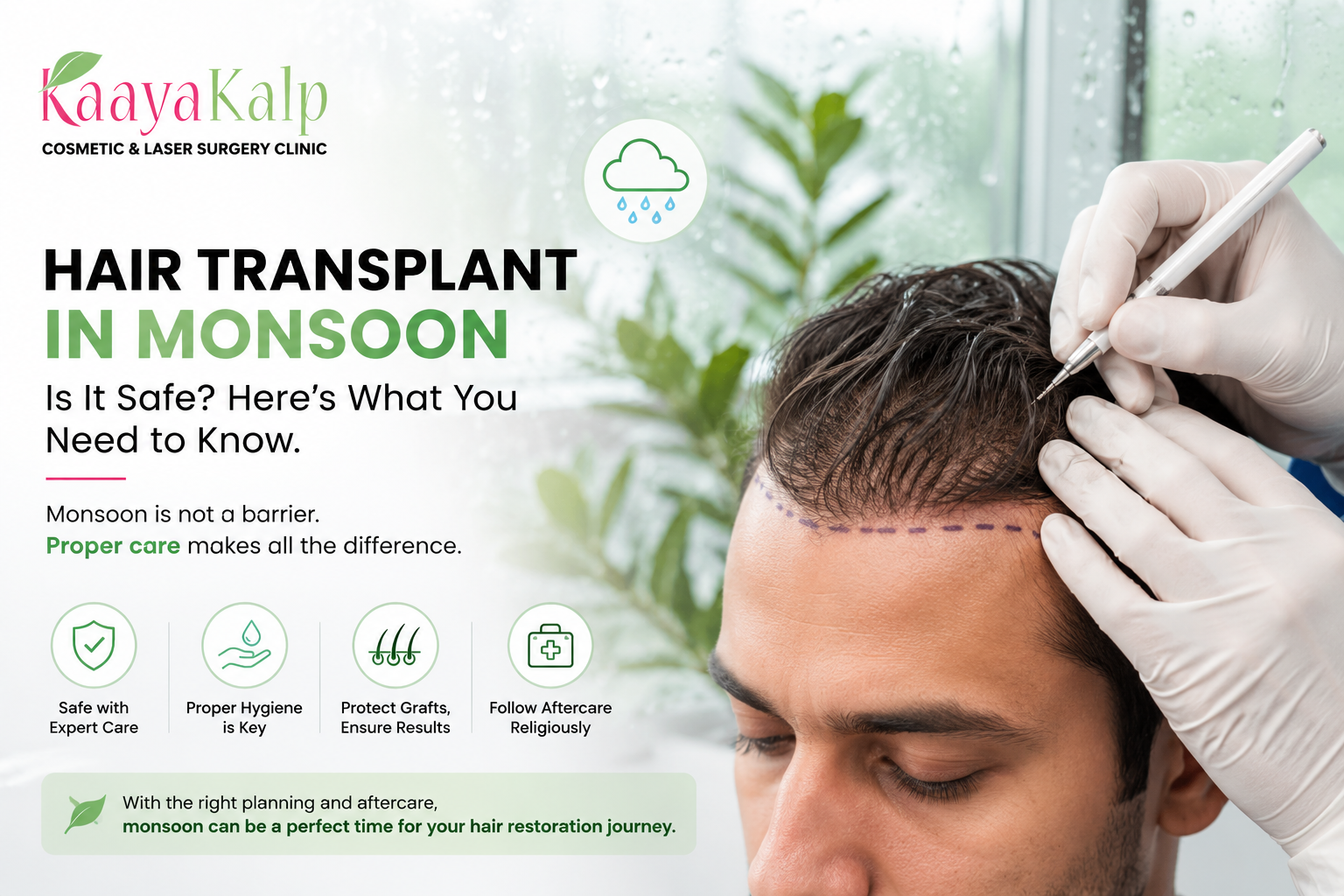
The short answer is this: yes, a hair transplant can be safely done during the monsoon when it is planned by an experienced surgeon and followed with proper aftercare. The season itself does not damage hair grafts. What matters more is your scalp condition, hygiene, sweating, travel exposure, and how carefully you follow post-transplant instructions.
This article will help you understand what monsoon changes, what it does not, and how to protect your results.
Does Monsoon Affect Hair Graft Survival?
Monsoon weather does not directly affect graft survival. Hair grafts survive because of proper extraction, careful handling, correct implantation, blood supply, and post-operative care.
In the first few days, the newly implanted grafts are delicate. They need time to settle into the scalp. During this period, you must avoid —
- Rubbing
- Scratching
- Extensive workout
- Exposing the scalp to rainwater.
Once the grafts settle in, the healing process continues gradually. You may notice tiny scabs, mild redness, swelling, or itching, but these are common parts of early recovery.
Your surgeon will explain when to wash your scalp, how to clean it, and when you can return to normal activities.
Is Monsoon Actually a Good Time for a Hair Transplant?
For many people, the monsoon can be a perfect time to plan a hair transplant in Kolkata. The weather is usually less harsh than peak summer. You may also find it easier to avoid direct sun exposure, which is important after most surgical or aesthetic procedures.
However, regardless of the seasons, the treatment depends on your scalp health, lifestyle, job type, travel routine, sweating tendency, and recovery discipline.
Monsoon may suit you if:
- You can stay indoors for the first few days.
- You can avoid rain exposure after surgery.
- You can follow scalp-cleaning instructions properly.
- You do not have an active scalp infection.
- You can avoid heavy workouts and sweating.
- You are planning results ahead of festive or wedding season.
You may need to wait if you have active dandruff, fungal infections, boils, uncontrolled diabetes, severe scalp itching, or any untreated skin condition on the scalp. A proper consultation helps your doctor decide the safest timing.
Concerning Factors About Hair Transplant During Monsoon
Monsoon creates a few concerns. Your scalp may sweat more because of humidity. Rainwater can carry dust and pollutants. Fungal infections and dandruff may flare up in some people. Travel through wet, crowded, or dusty areas can also make scalp care harder during the first few days after surgery.
These concerns are valid. A hair transplant involves placing healthy hair follicles into thinning or bald areas. The early healing phase needs cleanliness, gentle handling, and protection from friction, scratching, and infection.
However, this does not mean monsoon is a bad season for hair transplant. It simply means your aftercare needs to be more disciplined.
The goal is simple: keep your scalp clean, dry, and protected without touching or rubbing the grafts.
Can Rainwater Damage Transplanted Hair?
Ideally, rainwater should not touch your scalp during the early healing period.
However, if you get caught in the rain soon after your hair transplant, do not panic. Do not rub the scalp with a towel. Do not scratch the grafted area. Gently follow the cleaning instructions given by your surgeon and contact the clinic if you notice unusual pain, swelling, pus, fever, or increasing redness.
Monsoon Hair Fall vs Permanent Baldness
Many people notice increased hair fall during the monsoon. This can happen because of humidity, scalp imbalance, dandruff, fungal issues, or seasonal shedding. But not every type of hair fall needs a hair transplant.
A hair transplant is usually considered when you have stable bald patches, visible thinning, a receding hairline, or male-pattern or female-pattern hair loss that does not improve with medical care alone.
If your hair fall is temporary, consider scalp treatment, medicines, PRP, GFC, or lifestyle correction first. If you have permanent follicle loss in certain areas, hair transplant is a more ideal option.
That is why diagnosis comes before treatment. A good hair transplant plan starts by understanding the reason behind your hair loss.
What About Infection Risk During Monsoon?
Monsoon can increase the chance of skin and scalp infections, especially in people who are prone to dandruff, fungal growth, or oily scalp conditions. After a hair transplant, the scalp is in a healing phase, making hygiene even more critical.
Common Risk Factors During Monsoon
- Increased humidity leading to fungal or bacterial growth
- Excessive sweating causing scalp irritation
- Exposure to polluted rainwater
- Pre-existing dandruff or scalp infections
- Poor hygiene or improper aftercare
How to Reduce Infection Risk
You can significantly lower the risk by choosing a clinic that follows:
- Strict surgical hygiene and sterilization protocols
- Experienced medical handling of grafts
- Structured post-operative care and follow-up
Essential Aftercare Precautions
- Avoid touching implanted grafts with unwashed hands
- Do not apply random oils, hair packs, or home remedies
- Avoid styling products unless prescribed
- Do not visit salons until your surgeon permits
- Use only recommended shampoos and medications
A clean surgical environment combined with disciplined aftercare plays a crucial role in ensuring safe healing and successful results.
How to Prepare for a Hair Transplant Treatment
If you are planning a hair transplant during the monsoon, preparation should not stop at booking the procedure. You need to think about your scalp condition, travel, hygiene, sweating, and early recovery.
A little planning before the procedure can make the healing phase smoother and safer.
Here are the key things to keep in mind:
- Get your scalp examined before the procedure.
- Treat dandruff, itching, folliculitis, fungal infection, or scalp inflammation before surgery.
- Discuss your medicines, medical history, diabetes status, dietary habits, and previous hair treatments with your surgeon.
Below are a few Aftercare Tips—-
- Avoid gym workouts, running, cycling, and swimming until your doctor allows them.
- Do not rub, scratch, or press the grafted area.
- Sleep carefully and avoid friction on the transplanted area.
- Keep pillow covers, towels, and your sleeping area clean and dry.
- Avoid dusty pillows, damp towels, sweaty caps, and unhygienic head coverings.
- Wash your scalp only as advised by your doctor
- Avoid helmets, tight caps, and direct scalp pressure until your doctor clears you.
- Do not apply random oils, home remedies, hair packs, or styling products.
You may also notice shedding of transplanted hair after a few weeks. This is commonly called shock loss and is usually part of the normal hair transplant cycle. The roots remain inside, and new growth gradually begins over the next few months.
Hair transplant results take time, so avoid judging the outcome too early. Good preparation, careful hygiene, and disciplined aftercare can make your recovery safer and more comfortable.
When Can You Return to Work After a Hair Transplant?
Many patients can return to desk work within a few days, depending on the size of the procedure and their comfort level. If your job involves field visits or excessive physical work, you may need a longer recovery plan.
Daily commuting, humidity, traffic, and sudden rainfall can make aftercare more challenging. So, discuss your work routine with your surgeon before choosing a surgery date.
Why Consider Kaayakalp for Hair Transplant in Kolkata?
As a leading hair transplant clinic in Kolkata, Kaayakalp conducts treatments with a medical, diagnosis-first approach. The goal is not just to fill bald areas. The goal is to understand your hair loss pattern, preserve your existing hair, plan natural-looking density, and support safe recovery.
If you are considering a hair transplant during the monsoon, at Kaayakalp, our experts can help you understand whether this is the right time for your scalp, lifestyle, and expectations.
Final Takeaway: Safe, But Only With the Right Planning
A hair transplant during monsoon can be a safe and well-planned decision when you receive the right medical guidance. Healthy hair growth and the success of the treatment depend on 3 main factors ----
Experienced Hair Transplant Surgeon and team
Proper Health Care
Proper After Care
Monsoon can also be a practical time to begin a hair restoration journey. With proper scalp hygiene, protected travel, and regular follow-up, recovery can be smooth and manageable.
If you are noticing bald patches, a receding hairline, or long-term thinning, a consultation at Kaayakalp Cosmetic & Laser Surgery Clinic in Kolkata can help you understand the right option for your hair loss treatment.
FAQs
Is hair transplant safe during monsoon in Kolkata?
Yes, hair transplant can be safe during monsoon when performed in a sterile clinical setting and followed with proper aftercare. You need to avoid rainwater, heavy sweating, scalp scratching, and poor hygiene during early recovery.
Can sweating damage hair grafts?
Mild sweating may not always damage grafts, but heavy sweating can irritate the scalp and increase discomfort. You should avoid gym workouts, running, cycling, and long outdoor travel until your surgeon allows them.
Can I go out in the rain after a hair transplant?
You should avoid rain exposure during the early healing phase. Rainwater can carry dust, pollutants, and germs. If your scalp gets wet accidentally, do not rub it. Follow your clinic’s cleaning instructions and contact your doctor if you notice unusual symptoms.
Is monsoon hair fall the same as baldness?
No. Monsoon hair fall can be temporary. Baldness usually involves long-term follicle miniaturization or permanent hair loss. A doctor can examine your scalp and tell whether you need medicines, PRP, GFC, or hair transplant.
How soon will I see results after hair transplant?
Hair transplant results take time. Some shedding can happen after the procedure. New growth usually appears gradually over months, and fuller visible improvement takes longer. Your surgeon will explain the expected timeline based on your case.
Should I treat dandruff before hair transplant?
Yes, active dandruff, itching, fungal infection, or scalp inflammation should be treated before surgery. A healthy scalp supports smoother healing and better comfort after the procedure.