Russian Lip Technique vs. Classic Lip Fillers: What to Choose?
Lip enhancement has come a long way. What once meant simply adding volume to thin lips now involves a choice between highly specialised techniques — each delivering a distinct look, feel, and result. If you've been exploring lip augmentation in Kolkata and keep coming across "Russian lips" or "classic fillers," you're not alone. Most people walk into a consultation knowing they want better lips — but not always knowing which path gets them there.
What Are Classic Lip Fillers?
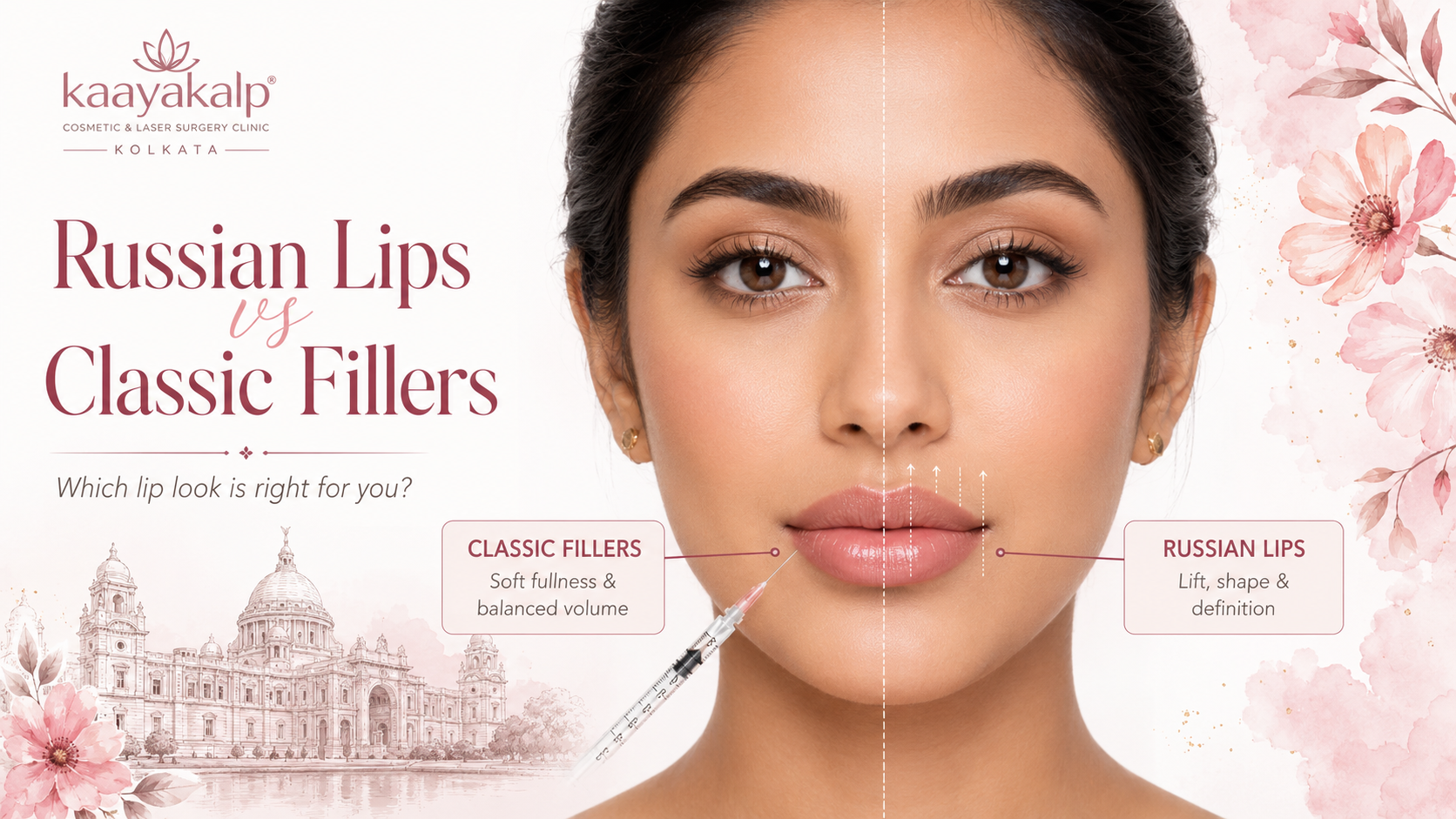
Classic lip fillers are the most widely performed lip enhancement technique worldwide. The filler — typically a hyaluronic acid-based gel — is injected horizontally into the lip tissue to add overall volume, fullness, and shape.
What the result looks like:
- Lips appear fuller and plumper across the entire lip area
- Natural outward projection — the lips look visibly bigger from the front
- Works beautifully to add symmetry and correct uneven lips
- Softer, more rounded results with a natural movement
Who it works best for:
- Someone with naturally thin lips who wants visible volume
- First-time filler patients looking for a gentle, familiar enhancement
- Those who want their lips to look fuller without dramatic reshaping
Classic lip fillers are the go-to choice when the goal is balanced fullness — not reinvention.
What Is the Russian Lip Technique?
The Russian lip technique is a more advanced, precision-based approach. Instead of horizontal injections that spread volume outward, the filler is injected vertically — from the border of the lip upward, in a technique sometimes called "tenting." This lifts the lip rather than simply puffing it.
The name is inspired by the defined, heart-shaped lip aesthetic associated with traditional Eastern European beauty — think structured Cupid's bow, lifted centre, and a flat side profile that doesn't protrude forward.
What the result looks like:
- A more defined, sculpted Cupid's bow
- Visible height and lift in the upper lip, especially the centre
- Flat side profile — no forward projection or "duck lip" effect
- Heart-shaped, structured finish with clear lip borders
Who it works best for:
- Someone who wants shape and definition more than volume
- Those with a long philtrum (the space between nose and lips) — Russian lips visually shorten this
- People who want a polished, high-fashion result
- Anyone worried about the "overfilled" look
Russian Lip vs. Classic Filler: A Side-by-Side View
| Feature | Classic Lip Filler | Russian Lip Technique |
| Injection direction | Horizontal | Vertical |
| Primary result | Volume & fullness | Lift & definition |
| Side profile | Slight forward projection | Flat, no projection |
| Cupid's bow | Softly enhanced | Sharply defined |
| Best for | Thin lips needing volume | Lips needing shape & height |
| Technique complexity | Standard | Advanced |
| Swelling post-procedure | Mild, settles in 24–48 hrs | Slightly more, settles in 3–5 days |
| Results last | 9–12 months | 6–9 months |
The Key Question: Volume or Shape?
This is really what the decision comes down to.
If your lips feel flat or too thin and you want them to simply look more — classic fillers deliver that naturally and effectively.
If your lips have some volume but lack definition, or you've always wanted a structured, elevated look with a sharp Cupid's bow — the Russian technique is the better fit.
It's also worth noting that the Russian method requires a higher level of injector skill. Vertical placement near blood vessels demands anatomical precision — choosing an experienced, medically trained professional isn't optional, it's essential.
Can You Combine Both Techniques?
Yes — and increasingly, skilled practitioners in plastic and cosmetic surgery in Kolkata are offering a hybrid approach. It uses the Russian technique to define the Cupid's bow and lift the centre, while classic filler adds softness and volume in the body of the lip. The result is neither too sculpted nor too plump — just a beautifully balanced pout.
A Note on Aftercare
Whichever technique you choose, avoid pressure on the lips for the first 48 hours — no straws, intense heat, or strenuous exercise. Some swelling is completely normal, especially with Russian lips. Final results settle in about 2 weeks, so don't judge by day one.
Make Your Decision at Kaayakalp
Whether you're drawn to the soft fullness of classic fillers or the sculpted elegance of the Russian lip technique, the most important step is a consultation with someone who understands both — and knows how to match the right technique to your face.
At Kaayakalp, Dr. V.S. Rathore and his team bring together deep expertise in cosmetic surgery in Kolkata with a treatment philosophy built on precision, safety, and results that look like you — only better.
Book your lip consultation at Kaayakalp today and walk out knowing exactly what your lips need.
Frequently Asked Questions
Q1. Is the Russian lip technique more painful than classic fillers? Not significantly. Both involve numbing cream before the procedure. The Russian technique uses more injection points, so you may feel slightly more pressure — but most people tolerate it well.
Q2. How long do Russian lip fillers last compared to classic fillers? Classic fillers typically last 9–12 months. Russian lip results tend to last 6–9 months, as the concentrated vertical placement metabolises a little faster. Regular top-ups maintain the look.
Q3. Will Russian lips look natural? When done by a trained injector, yes. The technique enhances your natural structure — not overrides it. Results look especially natural on lips that haven't had previous filler.
Q4. Can I switch from classic fillers to the Russian technique? It's possible, but your injector may recommend dissolving existing filler first, as previous horizontal filler can interfere with the vertical lift the Russian technique is built on.
Q5. Which technique suits Indian lip shapes better? Both work well. The choice depends more on your lip anatomy than skin tone. Fuller lips often benefit from Russian technique for definition without bulk; thinner lips usually respond better to classic volume-first fillers.