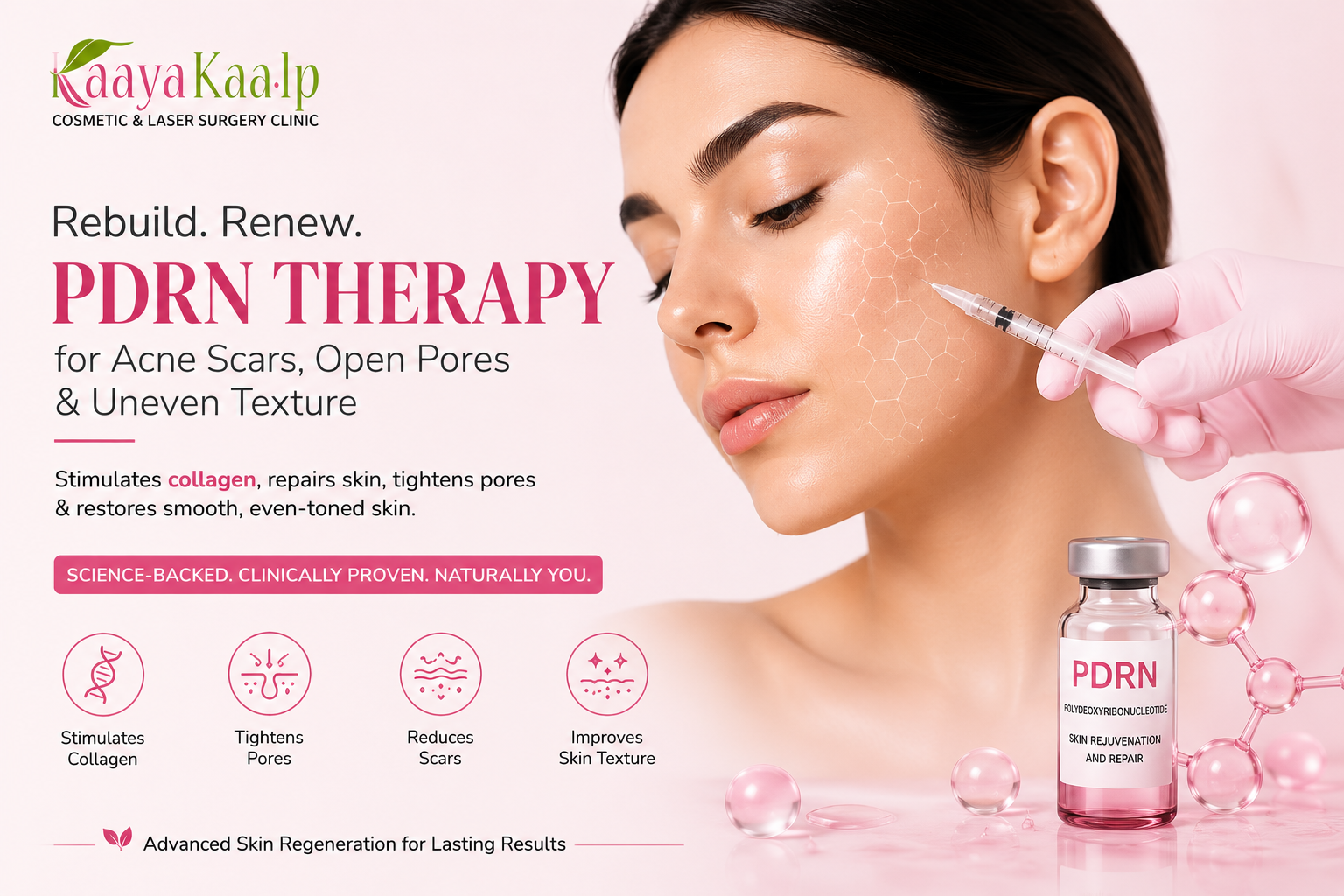
Can PDRN Help with Acne Scars, Open Pores & Uneven Skin Texture?
If your skin has been through years of breakouts, sun damage, or just the slow grind of time, you already know that no single moisturiser or serum is going to undo it. Acne scars sit deep. Open pores refuse to shrink. Uneven texture catches light in all the wrong ways. These are structural problems — and they need a structural solution.
That's where PDRN comes in.
What Is PDRN?
PDRN stands for Polydeoxyribonucleotide — a compound derived from purified salmon DNA. Before that raises any eyebrows, this isn't a gimmick. PDRN has been studied in regenerative medicine for decades, primarily for wound healing, and its application in aesthetic dermatology is one of the more evidence-backed developments in the field.
It works by activating adenosine A2A receptors in the skin — receptors that trigger tissue regeneration, reduce inflammation, and stimulate collagen synthesis. In simpler terms: it sends signals to your skin cells telling them to repair and rebuild.
Why Acne Scars Are So Difficult to Treat
Acne scars aren't just marks on the surface. When a breakout causes deep inflammation, it disrupts the skin's collagen network. The skin heals, but imperfectly — leaving behind:
- Atrophic scars (ice pick, boxcar, rolling types) — where tissue is lost
- Post-inflammatory hyperpigmentation — dark spots left behind after healing
- Textural irregularities — areas where the skin surface is uneven at a structural level
Most topical treatments address pigmentation alone. They don't rebuild what's been lost beneath the surface. PDRN works differently — it targets the tissue itself.
How PDRN Addresses Acne Scars
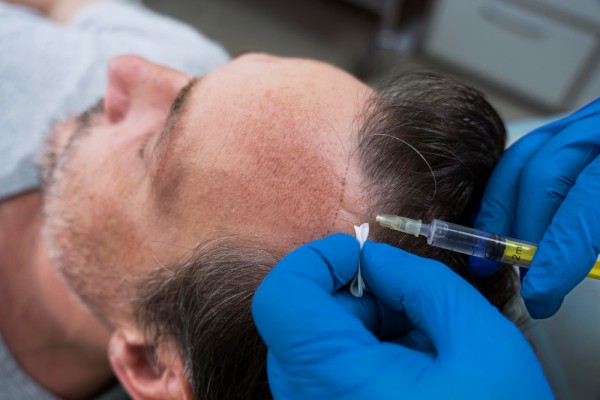
PDRN injections (delivered intradermally, usually in micro-doses) work on acne scars through multiple mechanisms:
Collagen induction:
PDRN stimulates fibroblasts — the cells responsible for producing collagen and elastin. Over weeks and sessions, this rebuilds the dermal scaffolding that acne has broken down.
Anti-inflammatory action:
Since chronic low-grade inflammation drives ongoing skin damage, PDRN's ability to calm inflammation also prevents future scarring from worsening.
Cellular repair:
By promoting DNA repair at a cellular level, PDRN helps damaged skin cells recover function, which translates to smoother, more even skin over time.
Results aren't instant. Most patients see a meaningful difference after 3 to 6 sessions spaced 2 to 3 weeks apart.
The Open Pores Problem — And What PDRN Actually Does
"Open pores" is a term people use loosely, but the underlying issue is usually a loss of elasticity in the skin surrounding each pore. When collagen breaks down (due to age, sun damage, or repeated breakouts), the structural support around pores weakens, making them appear larger.
PDRN tightens pores not by mechanically shrinking them (nothing truly does that) but by restoring the collagen framework around them. As the dermis becomes denser and more elastic, the skin tightens slightly, and pores appear visibly smaller.
This is a gradual process — not a one-session fix — but the improvement tends to hold well because it's rooted in actual tissue change.
Uneven Skin Texture: A Multifactorial Problem
Rough, bumpy, or dull texture can result from:
- Residual acne scarring
- Sun damage and photoaging
- Keratosis pilaris (a genetic tendency to trap dead skin in hair follicles)
- Loss of hydration and skin integrity over time
PDRN works best on texture caused by scarring, sun damage, and collagen loss. It's particularly effective when combined with other modalities. In many advanced clinics, PDRN is used alongside microneedling, chemical peels, or laser resurfacing to enhance results — the PDRN aids faster recovery while boosting the regenerative outcome.
What to Expect: A Realistic Timeline
| Session | What Happens |
| 1-2 | Skin feels hydrated; inflammation may reduce |
| 3-4 | Texture begins to improve; scars appear softer |
| 5-6 | Visible reduction in scar depth and pore appearance |
| Post Treatment | Collagen continues to rebuild for 3–6 months |
Maintenance sessions (every 3 to 6 months) help sustain results long-term.
Who Is a Good Candidate for PDRN?
PDRN is suitable for most adults dealing with:
- Moderate to deep acne scars (especially rolling and boxcar)
- Enlarged pores, particularly in the T-zone
- Dull, uneven, or rough skin texture
- Post-inflammatory marks from past breakouts
It's generally not recommended during pregnancy, for those with known fish allergies (due to its salmon DNA origin), or for active acne breakouts.
A clinical consultation with an experienced specialist is always the right first step — skin concerns are rarely one-size-fits-all.
Is PDRN Better Than Other Scar Treatments?
Not necessarily better — but complementary and often preferable for certain skin types or concerns.
- Vs. laser resurfacing: PDRN has minimal downtime and works well on darker skin tones where lasers carry pigmentation risks.
- Vs. dermal fillers: Fillers volumize; PDRN regenerates. They serve different purposes and are sometimes used together.
- Vs. chemical peels: Peels resurface the top layer; PDRN works at a deeper dermal level.
- Vs. PRP (Platelet-Rich Plasma): Both are regenerative, but PDRN is more standardised in composition and has a longer evidence base.
The most effective approach is often a combination protocol designed specifically around your skin's needs.
A Note on Where You Get It Done
The quality of PDRN treatment depends enormously on the product quality, injection depth, and the clinical expertise behind it. This isn't a treatment for a spa menu. It requires precise intradermal placement and a thorough skin assessment beforehand.
As skin treatment in Kolkata has evolved significantly over the last few years, more patients are now accessing globally benchmarked regenerative protocols — not just topical solutions.
Key Takeaways
PDRN represents a genuine shift in how skin repair is approached — moving from surface treatments to deep, cellular regeneration. For acne scars, open pores, and uneven texture, it's one of the most scientifically grounded options available today.
At Kaayakalp, under the guidance of Dr. V. S. Rathore — a trusted cosmetic surgeon in Kolkata with extensive experience in regenerative aesthetics — PDRN treatments are tailored to each patient's specific skin profile. No generic protocols. No guesswork.
Book your skin consultation at Kaayakalp today. Your skin has already done the hard work of healing — now give it the science to do it better.
Frequently Asked Questions
Q1. Does PDRN actually work for acne scars, or is it just a trend?
PDRN has a solid research background in wound healing and tissue regeneration. For acne scars, it works by stimulating your skin to produce more collagen — the protein that fills in and smooths damaged areas. It's not a magic fix, and results take several sessions, but the science behind it is real and well-documented.
Q2. How many sessions of PDRN will I need before I see a difference?
Most people start noticing a change in skin texture and hydration after 2 to 3 sessions. For visible improvement in acne scars and pores, a course of 4 to 6 sessions is typically recommended, spaced 2 to 3 weeks apart. Collagen continues building for months after your last session, so results keep improving.
Q3. Is PDRN painful? What does the treatment feel like?
The injections are very fine and are usually tolerable. A numbing cream is applied beforehand in most cases, which significantly reduces any discomfort. Some people describe a mild pricking sensation, and the skin may be slightly red or feel warm for a few hours after — but there's no real downtime.
Q4. Can PDRN be used on all skin tones?
Yes — this is actually one of the reasons PDRN is increasingly preferred over laser-based treatments. Because it doesn't use heat or light energy, it does not carry the risk of pigmentation changes that lasers can cause in medium to darker skin tones. It's generally considered safe across all skin types.
Q5. How long do PDRN results last?
With a full course of treatment, results can last anywhere from 6 to 12 months, sometimes longer depending on your skin's condition and how well you maintain it. Most people come back for a maintenance session every few months to keep the results going, especially for persistent acne scarring or ageing-related texture changes.