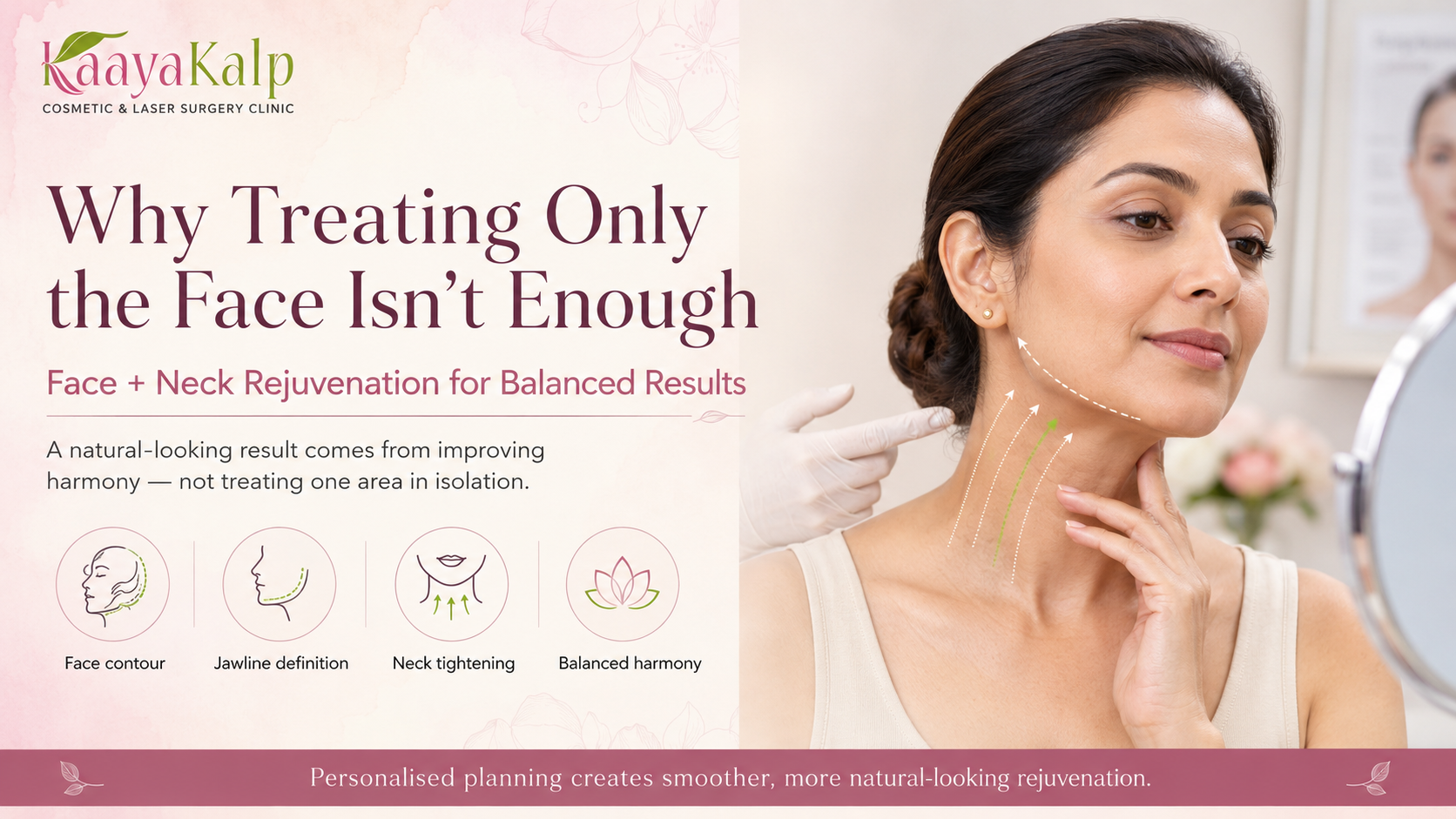
Face vs Neck Aging: Why Treating Only One Area Creates Imbalance
Many people invest time and effort into improving their facial appearance. Smoother skin, better contours, and a refreshed look often become the focus. But over time, something feels slightly off. The face looks rejuvenated, yet the neck still reflects aging.
If you are exploring cosmetic treatment in Kolkata, understanding this imbalance is important. Treating only the face can sometimes highlight the contrast with the neck, making results feel incomplete rather than natural. This guide explains why that happens and how a more balanced approach creates better outcomes.
Why Does the Neck Age Faster Than the Face?
This is one of the most common concerns people notice but don’t fully understand.
The neck ages differently because:
- Thinner skin: Neck skin has fewer oil glands and less collagen support
- Constant movement: Looking down at phones or laptops increases skin folding
- Less protection: Sunscreen and skincare are often applied only to the face
- Weaker structural support: The neck has less fat cushioning compared to the face
These factors make the neck more prone to early laxity, fine lines, and crepey texture.
Face vs Neck Aging: What’s the Real Difference?
Understanding how these two areas age helps explain why treating only one can feel incomplete.
Facial Aging
- Volume loss in cheeks and under eyes
- Fine lines and wrinkles
- Changes in contour and definition
Neck Aging
- Loose or sagging skin
- Horizontal lines (“neck lines”)
- Reduced firmness and elasticity
While the face often needs volume restoration and contouring, the neck needs tightening and texture improvement. Treating only the face addresses just one part of the overall picture.
Why Treating Only the Face Can Create Imbalance
This is where many people feel dissatisfied without knowing why.
When the face is treated but the neck is not:
- The face appears smoother and lifted
- The neck continues to show laxity or lines
- The contrast becomes more noticeable
Instead of looking naturally refreshed, the difference between the two areas can stand out. This is not because the treatment failed—it is because the approach was incomplete.
What Causes Jawline and Neck Changes Over Time?
The jawline acts as a bridge between the face and the neck. Changes here affect both areas.
Key factors include:
- Loss of skin elasticity
- Gradual fat redistribution
- Muscle activity pulling the skin downward
- Reduced collagen production
These changes soften the jawline and blur the transition between face and neck, making aging more visible.
What Are the Best Combined Treatment Approaches?
A balanced approach focuses on both areas together. The goal is not to overcorrect, but to create harmony.
1. Skin Quality Improvement
Treatments that improve hydration and texture help both face and neck look healthier and more even.
2. Tightening and Lifting
Non-surgical options can support skin firmness, especially in the neck where laxity is more noticeable.
3. Structural Support
Enhancing the jawline helps define the transition between face and neck, improving overall balance.
When planned together, these steps create a more natural and consistent result.
Cosmetic Treatment in Kolkata: Why Planning Matters More Than Procedure
Choosing the right cosmetic treatment in Kolkata is not just about selecting a procedure. It is about understanding how different areas of the face and neck interact.
A well-planned approach considers:
- Skin condition across both areas
- Degree of volume loss vs skin laxity
- Long-term aging patterns
- Subtle improvements rather than isolated changes
This kind of planning ensures that results look balanced, not fragmented.
Can Non-Surgical Treatments Address Both Face and Neck?
Yes, in many cases, non-surgical options are effective when used strategically.
They can:
- Improve skin texture and hydration
- Support collagen production
- Enhance jawline definition
- Reduce early signs of neck laxity
However, results depend on the starting condition and consistency of treatment. A combination approach often works better than relying on a single solution.
Who Should Consider Treating Both Areas Together?
You may benefit from a combined approach if you notice:
- A visible difference between face and neck appearance
- Early signs of neck sagging despite facial treatments
- Loss of jawline definition
- Uneven skin texture between the two areas
Addressing both areas together helps create a more natural, well-balanced result.
A Practical Perspective on Balanced Aging
Aging does not happen in isolated areas. It is a gradual process that affects multiple layers and regions.
Treating only one visible concern may bring partial improvement. But when the face and neck are considered together, results tend to look more consistent and refined.
At Kaayakalp, treatment planning focuses on overall harmony rather than isolated correction. This approach helps maintain natural expressions while improving skin quality and structure over time.
If you are considering aesthetic improvements, book a consultation to understand how a balanced treatment plan can work for you.
FAQs
1. Can you tighten neck skin without surgery?
Yes, non-surgical treatments can improve neck skin firmness by stimulating collagen production. Results are gradual and work best for mild to moderate skin laxity.
2. How long does HIFU last on the neck?
HIFU results on the neck typically last 6 to 12 months. Longevity depends on skin condition, age, and maintenance treatments over time.
3. Are jawline fillers safe?
Jawline fillers are generally safe when performed by experienced professionals. Proper technique and planning are essential to achieve natural-looking and balanced results.
4. What is the best treatment for turkey neck?
The best treatment depends on severity. Mild cases respond to skin tightening, while moderate to advanced laxity may require combination or surgical approaches.
5. How many sessions are needed for neck tightening?
Most non-surgical neck tightening treatments require 2 to 4 sessions, depending on skin condition and the specific technique used for improvement.